Introduction
Defining your wedding floral style is often one of the most exciting parts of the planning process… but also one of the most overwhelming.
With endless inspiration on Pinterest and Instagram, it’s easy to fall in love with multiple aesthetics that don’t necessarily work together.
Yet, a floral style is not simply about choosing flowers or colors.
It’s about creating a cohesive visual direction that reflects your venue, your season, and the atmosphere you want to create.
1. What is a floral style, really?
A floral style is not defined by specific flowers.
It is a combination of several elements:
- Shapes (structured, loose, asymmetrical)
- Volume (minimal or abundant)
- Color palette (soft, bold, monochrome)
- Textures (foliage, airy blooms, layered materials)
These elements work together to create a distinct visual identity.
Two arrangements can use the same flowers and still feel completely different depending on how they are designed.
2. Start with your venue
Your venue is one of the most important factors in defining your floral style.
A wedding set in:
- a historic château
- a Provençal bastide
- a modern architectural space
- a natural garden
… will not call for the same floral approach.
Your floral design should enhance and complement the space, not compete with it.
A refined venue may require subtle, elegant compositions, while a more natural setting can support freer, more organic designs.
3. Understanding the main floral styles
Without going into overly technical terms, most wedding florals fall into a few key categories:
Romantic
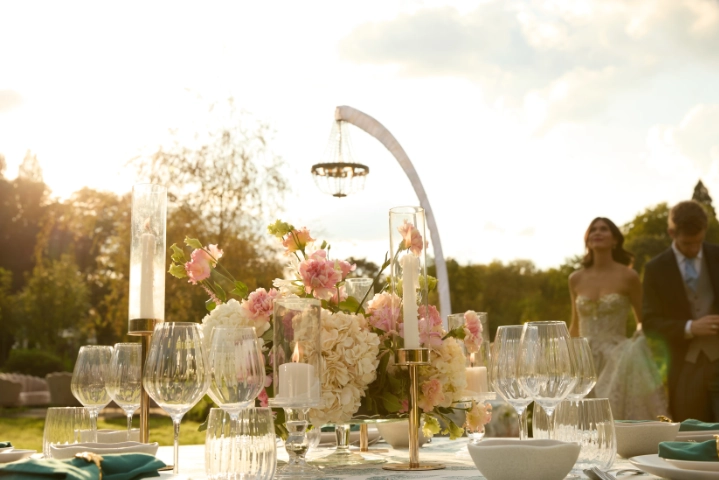
- Soft, elegant, often pastel tones
- Rounded shapes and lush blooms
- Timeless and classic
Natural / Garden-style
- Loose, organic, slightly wild
- Movement and asymmetry
- Inspired by nature and seasonal growth
Contemporary
- Clean lines, structured compositions
- Fewer varieties, strong visual impact
- Often paired with modern venues
Minimalist
- Very curated, intentionally simple
- Focus on space, materials, and balance
- Understated elegance
Editorial
- Artistic, sometimes bold or unexpected
- Play with volume, contrast, and structure
- Inspired by fashion and styled shoots
The goal is not to mix everything, but to identify one dominant direction.
4. Creating a cohesive color palette
Color is often the starting point — but it needs to be carefully refined.
A few guidelines:
- Limit yourself to 2–3 main tones
- Work with variations and shades rather than adding more colors
- Incorporate neutrals to create balance
Your palette should also respond to:
- the venue
- the season
- the natural light (especially for outdoor weddings)
5. Think in terms of texture and movement
What elevates floral design is often not the main flowers, but everything around them.
Textures play a key role:
- foliage
- secondary blooms
- light or structural elements
Movement is equally important:
- structured vs flowing arrangements
- static vs airy compositions
This is what creates a design that feels refined, dynamic, and high-end.
6. Work with the season, not against it
Many couples begin with a very specific inspiration — without considering seasonality.
However, the season directly affects:
- flower availability
- quality and freshness
- overall aesthetic
- budget
Adapting your floral style to the season allows for a more natural, harmonious, and often more elegant result.
7. Common mistakes to avoid
Some of the most frequent issues include:
- Mixing too many styles or inspirations
- Using too many colors
- Trying to replicate a photo without context
- Ignoring the venue’s character
- Choosing flowers based only on personal preference
A successful floral design is always about coherence.
8. Why working with a professional makes a difference
Defining a floral style requires perspective and experience.
A professional florist can help you:
- refine your ideas
- make confident decisions
- adapt inspiration to reality
- create a cohesive and achievable design
This is often what transforms a collection of ideas into a true visual concept.
And at Anyflowers…
At Anyflowers, we guide each couple in defining their floral universe based on three essential elements: the venue, the season, and the story behind the wedding.
Our approach focuses on harmony rather than trends. We design cohesive floral scenographies where every detail — from the bridal bouquet to large-scale installations — follows a unified aesthetic direction.
We favor natural movement, refined textures, and seasonal flowers to create settings that feel elegant, effortless, and timeless.
Conclusion
Defining your wedding floral style is not about choosing flowers — it’s about creating a vision.
A vision that is consistent, intentional, and perfectly aligned with your setting and atmosphere.
This coherence is what transforms a beautiful decoration into a truly memorable experience.