Introduction
When planning a wedding, flowers often appear as one of the most visible — and emotional — elements of the day. From the bridal bouquet to the ceremony arch and reception tables, floral design shapes the atmosphere, enhances the venue, and contributes to the overall experience.
However, many couples initially assume that any florist can handle wedding flowers.
In reality, there is a significant difference between a traditional retail florist and a wedding florist specialized in events.
Understanding this distinction is essential to making the right choice for your wedding.
1. A wedding florist is not just creating bouquets
A traditional florist typically works in a shop environment, creating daily arrangements, bouquets, and small-scale orders.
A wedding florist operates in a completely different framework.
Their role is to design and execute a full floral concept, often including:
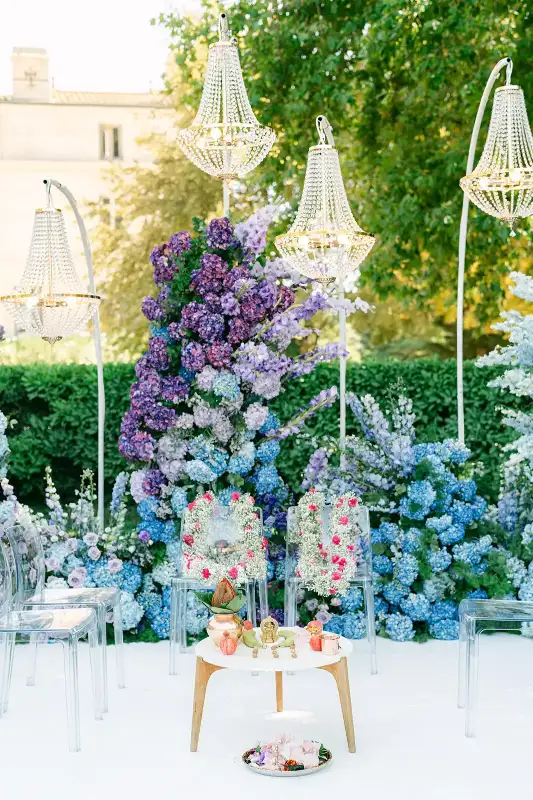
- Ceremony installations (arches, aisles, structures)
- Reception design (centerpieces, statement pieces, table styling)
- Bridal party flowers
- Large-scale scenography
This requires not only creativity, but also spatial thinking, event design expertise, and the ability to work at scale.
2. Floral design is part of a global wedding vision
In a wedding, flowers are never isolated.
They interact with:
- The venue architecture
- The lighting design
- The tableware and linens
- The overall aesthetic direction
A wedding florist approaches flowers as part of a cohesive visual narrative, ensuring consistency across all elements.
This is particularly important for destination weddings or high-end events, where every detail contributes to a refined and immersive atmosphere.
3. Logistics and timing are far more complex than expected
Unlike a retail order, wedding florals involve precise timing and coordination.
A wedding florist must:
- Source and condition flowers days in advance
- Prepare arrangements under strict time constraints
- Transport fragile installations safely
- Set up on-site within limited access windows
- Adapt to weather conditions and unforeseen challenges
Installations are often built in just a few hours, sometimes under intense heat, wind, or tight venue restrictions.
This logistical dimension is a major part of the expertise.
4. Experience makes a measurable difference
Weddings are live events — there is no room for error.
An experienced wedding florist anticipates:
- Structural stability of installations
- Flower longevity throughout the day
- Visual impact from different angles (especially for photography)
- Coordination with planners, venues, and other vendors
This level of anticipation is rarely part of a traditional florist’s daily work.
5. Understanding pricing: more than just flowers
One of the most common misconceptions is that wedding floral pricing is simply the cost of flowers.
In reality, a floral proposal includes:
- Design time and creative direction
- Flower sourcing and selection
- Labor (often several days of work)
- Logistics and transport
- Installation and dismantling
- Rental of vases, structures, or decorative elements
The flowers themselves are only one component of the overall service.
6. The value of a specialized partner
Choosing a wedding florist means choosing a partner who understands the rhythm, pressure, and complexity of an event.
It also means working with someone who can:
- Guide you in your aesthetic choices
- Adapt ideas to your venue and season
- Translate inspiration into a coherent, achievable design
This guidance is often what transforms initial ideas into a truly memorable setting.
7. Common mistakes when choosing a florist
Many couples make decisions based solely on images or price.
Some frequent pitfalls include:
- Choosing a florist without event experience
- Underestimating logistical constraints
- Expecting identical results from inspiration photos without adaptation
- Comparing quotes without understanding what is included
A wedding is a one-time event — the expertise behind the scenes matters as much as the visible result.
And at Anyflowers…
At Anyflowers, we have chosen to specialize exclusively in weddings and high-end events since more than 10 years..
We approach floral design as a complete experience — not just individual arrangements. Each project is developed in close connection with the venue, the season, and the overall aesthetic vision.
Our work combines creative direction, technical expertise, and logistical precision, allowing us to design installations that are both visually impactful and perfectly adapted to real conditions.
We favor seasonal flowers, natural movement, and refined compositions, always with the intention of creating a setting that feels effortless, elegant, and truly personal.
Conclusion
While all florists work with flowers, not all florists work with weddings.
Choosing a wedding florist means choosing expertise in design, logistics, and event execution — all essential elements to ensure that your floral vision comes to life seamlessly